Choosing a Jewelry Organizer for wholesale buyers requires more than comparing appearance and unit price. The right product must protect jewelry, simplify retail displays, and support repeat purchasing. A beautiful box can still fail when clasps tangle, velvet sheds, or compartments are too shallow.
Marie Kondo, a respected organization consultant, says, “The objective of cleaning is not just to clean, but to feel happiness living within that environment.” Her principle also applies to jewelry storage. Buyers should examine how customers will open, use, and restock each Jewelry Organizer. A ring tray needs firm slots. Necklace sections need enough spacing. Earring panels should prevent pairs from disappearing beneath other items.
Measure carefully.
Wholesale decisions also depend on practical details. Review material durability, hinge strength, surface finishing, and packaging protection. A supplier may offer attractive samples, yet production batches can show uneven stitching or color changes. That risk deserves attention. It is easy to trust one perfect sample too quickly.
Consider your retail environment. A compact organizer may suit boutique counters, while a larger case may fit home-storage collections. Clear acrylic improves visibility, but it can scratch during shipment. Velvet looks premium, but it may collect dust. Wood feels substantial, although its weight can increase freight costs.
Ask for product specifications, quality-control procedures, customization limits, and replenishment timelines. Request a production sample when possible. Then test it with real jewelry, not empty compartments. A reliable Jewelry Organizer should create order, protect merchandise, and remain practical after repeated use. The best choice is rarely the most decorative one. It is the one that performs consistently at scale.
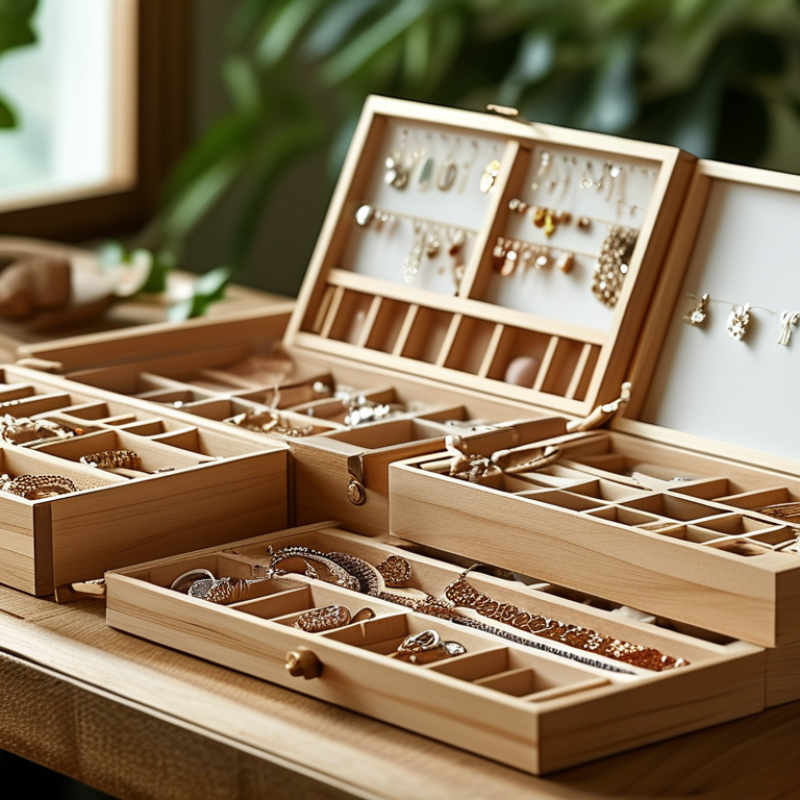
Define the Jewelry Organizer Needs of Your Wholesale Business
How to Choose a Jewelry Organizer for Wholesale Buyers?
Define the Jewelry Organizer Needs of Your Wholesale Business
Before comparing suppliers, define how your business will use each jewelry organizer. Count your active SKUs, average order size, and target retail price. A boutique may need compact velvet trays for display. An online seller may prefer stackable boxes that protect items during shipping. Your sales channel changes the specification.
Measure the jewelry carefully. Long necklaces need vertical space or separate hooks. Rings require firm slots that prevent movement. Earrings need holes, cards, or small compartments.
Test a sample with real inventory. A beautiful organizer can fail when bracelets overlap or clasps catch on fabric.
Think about volume, handling, and storage conditions. Ask for exact dimensions, material details, load capacity, and carton information. For wholesale orders, consistent color and stitching matter. They affect customer perception across multiple shipments.
I have seen buyers focus too much on unit price. Later, damaged corners and weak hinges created extra costs. That lesson is easy to overlook.
Choose a design that fits your workflow, not only your catalog photos. Consider shelf depth, packing time, replacement needs, and seasonal demand.
A small trial order can reveal practical problems early. Still, trials are not perfect. Customer feedback may change your preferred layout after launch. Keep that possibility in your purchasing plan.
Compare Jewelry Organizer Types, Materials, and Storage Features
Wholesale buyers should compare organizer types by the jewelry they handle most often. Ring trays with soft rolls prevent pieces from sliding, while compartment boxes suit earrings, pendants, and small sets. Stackable drawers save space during shipping and display setup. Hanging organizers work well for long necklaces, but they need secure hooks and enough vertical clearance.
Material affects protection, appearance, and cost. Velvet feels luxurious and reduces surface friction, yet it can collect dust in humid storage areas. PU leather is easy to wipe and offers a consistent appearance, although poor-quality surfaces may peel over time. Acrylic provides clear visibility and supports quick inventory checks. Wood feels solid, but it can add weight and require better moisture control. Metal frames improve durability when joints and coatings are properly tested.
Storage features deserve practical testing. Check whether dividers can move, whether drawers open smoothly, and whether necklace hooks prevent tangling. A 30-millimeter compartment may fit earrings but fail for bulky bracelets. Measure the packed organizer, not only the empty unit. In wholesale sampling, I would test ten loaded pieces, repeat drawer movement, and inspect corners after handling. No organizer is perfect. A beautiful tray may still waste space. Buyers should balance visual appeal, protection, packing efficiency, and replacement costs before placing larger orders.
How to read this chart: Ratings use a practical 1–5 purchasing scale, where 5 represents the strongest performance. Velvet-lined trays provide excellent presentation and scratch protection, acrylic organizers offer the best visibility, while wood cases provide strong durability and a premium appearance. Wholesale buyers should balance product protection, storage efficiency, visibility, portability, and material cost before placing an order.
Evaluate Capacity, Functionality, and Display Requirements
Wholesale jewelry organizers should be evaluated by usable capacity, not advertised capacity. Count compartments, tray levels, and adjustable sections. Measure the largest items, including statement necklaces and rigid bangles. A tray that holds 48 rings may fit only 36 pieces after protective spacing. Small details matter.
The National Retail Federation’s 2024 Retail Returns Landscape estimated $890 billion in returned merchandise, equal to 16.9% of annual retail sales. This report does not measure jewelry organizers, but it exposes the cost of poor handling. Choose velvet-lined slots, secure closures, and removable trays to reduce scratches, tangling, and unnecessary movement. Test each drawer with real inventory. Catalog photos can be misleading.
Display requirements deserve equal attention. Bain & Company’s Luxury Goods Worldwide Market Study reported strong jewelry growth in 2023, with jewelry among the better-performing luxury categories. Growing assortments need flexible presentation, not simply deeper storage. Use tiered inserts for visibility, neutral linings for color accuracy, and lockable cases for high-value pieces. Leave enough space for staff to lift one item without disturbing nearby pieces. This is where many wholesale buyers compromise too quickly. A compact organizer may save shipping space, yet slow every sales appointment. I would review actual handling time before approving a large order.азаара
Check Supplier Quality, Customization, Pricing, and Order Terms
How to Choose a Jewelry Organizer for Wholesale Buyers?
Supplier quality should be checked before discussing large quantities. Request physical samples, material details, production photos, and recent quality records. Inspect stitching, hinges, plating, lining, and drawer movement by hand. Small flaws often become expensive across thousands of units. Ask how defects are recorded and corrected. A clear inspection process shows practical experience, not just attractive promises.
Customization can improve shelf appeal, but it also increases risk. Confirm dimensions, colors, compartments, logo placement, packaging, and approved materials in writing. Request a pre-production sample before mass manufacturing. Do not approve from digital images alone. I have found that “minor” color differences can change the entire retail impression. That deserves careful review.
Pricing should include more than the unit cost. Compare tooling, sampling, packaging, shipping, taxes, and possible inspection fees. Check quantity breaks and minimum order requirements. A lower quote may hide weaker lining or shorter product life. Ask for payment stages, production time, replacement terms, and delay procedures. Reliable order terms should explain what happens when samples, quantities, or delivery dates change. Keep every agreement in one document. It feels slower, but scattered messages create avoidable disputes.
Select Organizers That Match Your Market and Sales Strategy
Choosing a jewelry organizer for wholesale is not simply a matter of appearance. The right unit should fit your market and sales strategy. A boutique selling delicate earrings may need shallow trays, soft dividers, and clear visibility. A gift retailer may prefer compact boxes for quick wrapping. Measure the jewelry first. Necklaces need separation, while rings need secure slots and easy access. I have seen attractive organizers fail because their compartments were too narrow.
Your sales strategy matters just as much. For online sellers, stackable organizers reduce storage pressure and simplify product photography. For physical stores, upright displays can improve browsing and prevent tangling. If your team replenishes stock daily, choose durable hinges, smooth drawers, and readable labels. Ask suppliers for material details, dimensions, sample units, and packing specifications. Test a small order before committing to volume. This can reveal weak stitching, sharp edges, or unstable trays.
Cost includes more than the unit price. Consider shipping volume, damaged goods, assembly time, and return handling. A low-priced organizer may become expensive when it wastes shelf space. Materials should match customer expectations. Soft lining feels premium, while washable surfaces suit practical, high-turnover products. Be honest about compromises. I once prioritized capacity and underestimated handling time. The result looked efficient on paper, but staff needed extra minutes per order. Review sales data, customer feedback, and staff comments before adjusting the next purchase.
FAQS
Count active products, average order size, and target retail prices. Measure real jewelry before choosing storage. Photos can mislead.
Choose vertical space, separate hooks, or hanging sections. Test several necklaces together. Tangling can appear quickly.
Rings need firm slots that prevent movement. Earrings need holes, cards, or small compartments. Loose pieces become difficult to count.
Velvet feels soft and reduces friction, but it may collect dust. Wipeable surfaces suit busy storage areas. Wood adds weight.
Stackable boxes save storage space and support safer shipping. Check packed dimensions, not only empty-unit measurements. Cartons can become surprisingly large.
Upright displays improve browsing and use vertical space. Shallow trays work well for delicate earrings. Hooks should remain stable during daily handling.
Load ten real pieces. Repeat drawer movements. Inspect hinges, corners, stitching, dividers, and sharp edges. Small tests reveal practical faults.
Not always. Add shipping volume, damaged goods, assembly time, and returns. A cheap organizer may waste shelf space or staff minutes.
Start with a small trial order and collect customer feedback. Staff comments matter too. The first layout may still be wrong.
Conclusion
Choosing the right Jewelry Organizer is an important decision for wholesale buyers because it affects product protection, presentation, storage efficiency, and customer satisfaction. Start by defining your business needs, including the jewelry categories you sell, your target market, expected order volume, and preferred retail channels. Then compare organizer types, materials, compartments, closures, and protective features to find options that balance durability, appearance, and practical use. Consider whether your customers need compact storage for personal use, larger solutions for collections, or attractive designs suitable for retail display.
Before placing an order, evaluate capacity, accessibility, portability, and visual appeal. Supplier reliability is equally important, so review product quality, customization options, pricing, minimum order quantities, lead times, packaging, and payment terms. The best choice should support your sales strategy rather than simply offer the lowest price. By matching the Jewelry Organizer with your market positioning, product range, and customer expectations, you can improve inventory performance, create a stronger shopping experience, and build more consistent wholesale value.

 Jiayu
Jiayu